Vertical Video Ads: Retail Signage for the TikTok Era
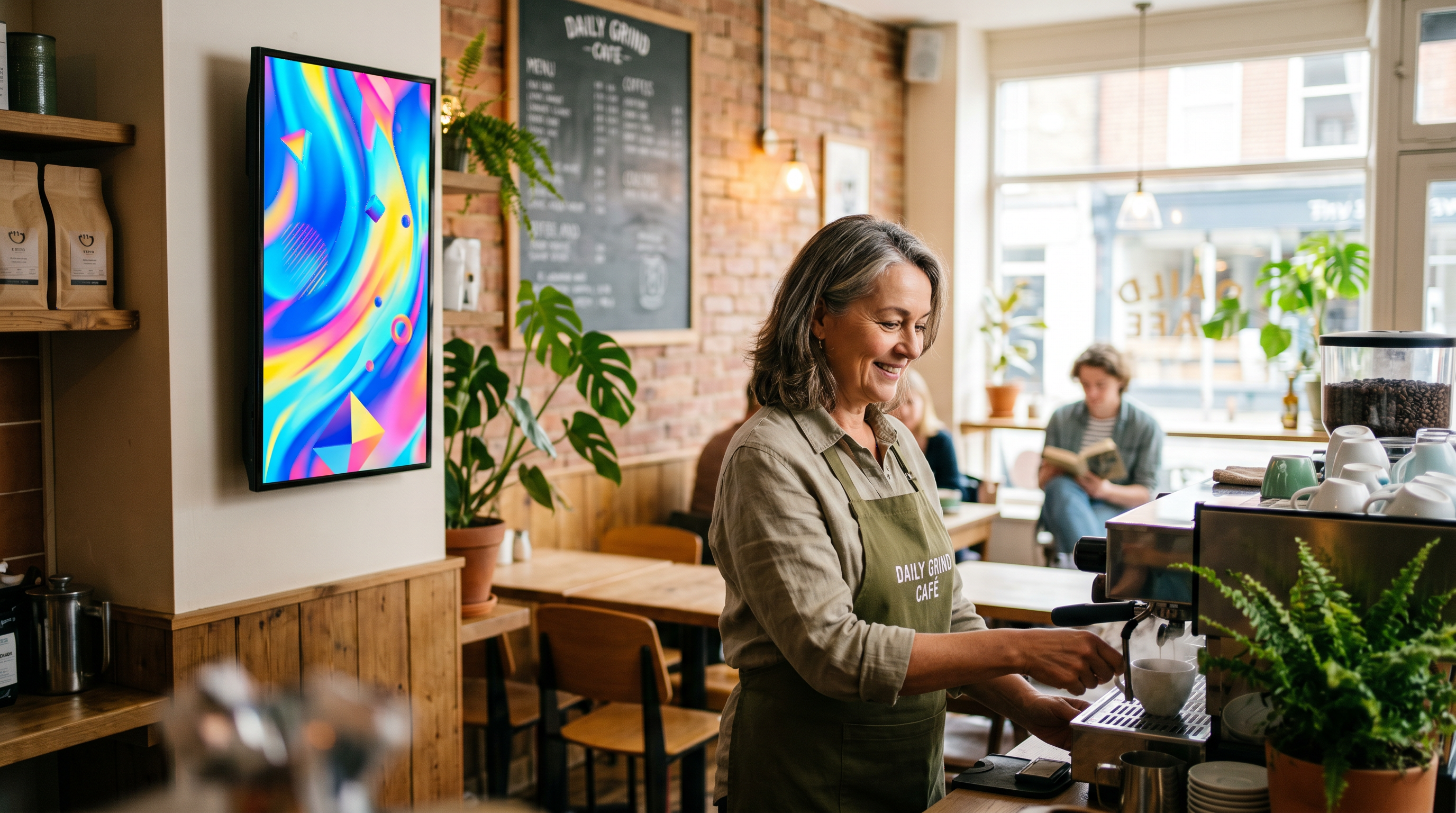
The rise of TikTok, Instagram Reels, and YouTube Shorts has fundamentally rewired consumer attention spans. Today's shoppers expect fast, visually arresting, and vertically oriented content wherever they look.
This mobile-first behavior is forcing a massive transformation in in-store digital signage content. Retailers and digital out-of-home (DOOH) networks can no longer rely on static, landscape images to capture customer attention.
To survive and monetize, physical retail spaces must adapt to the TikTok generation. With 26,000+ DOOH screens under contract, Trillboards is at the forefront of this vertical revolution.
This comprehensive guide explores how to optimize your retail media screen strategy using dynamic, short-form video formats. We will break down the latest industry standards, technical implementations, and programmatic monetization strategies.
The Shift to Vertical Video Advertising in Retail
For decades, the standard for digital signage was the horizontal 16:9 display. It mimicked television, making it easy to repurpose broadcast commercials for in-store screens.
However, the modern consumer's primary screen is the smartphone. People hold their phones vertically 94% of the time, conditioning their brains to process information in a portrait format.
When consumers look up from their phones in a retail environment, horizontal screens often feel outdated. Vertical video advertising bridges this gap, providing a seamless visual transition from the digital world to the physical store.
Why Portrait Mode Wins at the Point of Sale
Vertical screens take up less horizontal space, making them easier to deploy in tight retail environments like endcaps, checkout aisles, and structural pillars.
They also align perfectly with human anatomy. A life-size vertical screen can display a full-body image of a model wearing apparel, creating a highly relatable and immersive shopping experience.
Key Insight: Vertical screens command up to 400% more engagement in retail environments compared to traditional landscape displays, simply because they mirror the mobile interfaces shoppers use daily.
Innovative hardware networks are already capitalizing on this trend. For example, as VapeTM demonstrates with their smart vending machines with digital displays and advertising screens, vertical orientation allows for seamless integration of product selection and high-impact video ads.
By leveraging vertical displays, retailers can run eye-catching, native-feeling campaigns right at the point of purchase.
Rethinking In-Store Digital Signage Content
Adapting to vertical formats requires more than just rotating a screen 90 degrees. It requires a fundamental shift in content creation and delivery.
Simply cropping a horizontal TV commercial into a vertical frame results in poor framing, cut-off text, and a disjointed viewer experience. Brands must design short-form video for retail from the ground up.
The Rules of Short-Form Retail Video
The most successful in-store digital signage content borrows heavily from social media best practices.
- Hook within 3 seconds: Shoppers are moving. If the ad doesn't capture attention immediately, the impression is wasted.
- Design for sound-off: Retail environments are noisy. Content must rely on bold typography, motion graphics, and strong visuals to convey the message without audio.
- Keep it under 15 seconds: Dwell times vary by store zone, but concise, punchy messaging always outperforms long-form narratives.
- Use native framing: Keep essential text and logos in the "safe zones" (the center of the vertical frame) to ensure readability.
Contextual Relevance Drives Conversions
The true power of modern digital signage lies in its ability to be contextually aware. A vertical screen in a grocery store shouldn't play the same ad loop all day.
Instead, content should dynamically shift based on real-time factors like time of day, local weather, and current inventory levels.
We see this contextual relevance executed perfectly in specialized transit and event hubs. For instance, JUUCE's digital signage network utilizes vertical screens on portable phone charger rental kiosks in stadiums, delivering hyper-targeted, short-form video ads to a captive audience waiting for their devices.
IAB Standards and Retail Media Screen Strategy
As retail media matures into a multi-billion dollar industry, advertisers are demanding the same level of measurement and standardization they get from online campaigns.
The industry is rapidly adapting to this physical-digital crossover. According to the Interactive Advertising Bureau (IAB) and IAB Europe, newly finalized guidelines are formalizing how brick-and-mortar networks operate.
These standards are critical for publishers looking to attract premium programmatic demand.
Understanding the New In-Store Standards
The recently released In-Store Retail Media Definitions and Measurement Standards provide a unified framework for the industry.
By standardizing retail media screen strategy across key store zones, these guidelines allow brands to measure physical ads with rigorous accuracy.
The Five Key Retail Zones:
- Zone 1: Exterior & Entrances: High-impact, brand-awareness screens designed to drive foot traffic into the store.
- Zone 2: Main Aisles: Navigational and promotional screens targeting shoppers actively browsing categories.
- Zone 3: Endcaps & Shelves: Point-of-decision screens offering immediate product information and pricing incentives.
- Zone 4: Point of Sale (POS): Checkout screens capturing last-minute impulse purchases while shoppers wait in line.
- Zone 5: Experiential Areas: Fitting rooms, interactive kiosks, and lounge areas with extended dwell times.
The Shift to "Likelihood-to-See" (LTS)
Historically, DOOH relied on blunt foot-traffic estimates. The new IAB standards introduce the concept of "Likelihood-to-See" (LTS) impressions.
LTS calculates the exact probability that a shopper actually saw the ad, factoring in screen size, orientation, viewing angle, and the shopper's proximity to the display.
Trillboards natively supports these advanced measurement frameworks. Our platform integrates the OM SDK (Open Measurement) for MRC-compliant ad verification, ensuring buyers trust the impressions generated by your vertical screens.
Furthermore, across our network of 33 countries and 2,276 distinct cities, we support 1,558 IAB Audience Taxonomy 1.1 nodes (segtax=4) directly in OpenRTB requests.
Programmatic DOOH Creative Formats
To execute retail media campaigns efficiently, publishers are leaning heavily on programmatic DOOH creative formats.
Managing USB thumb drives or manual CMS playlists is no longer viable for enterprise networks with hundreds of screens. Automation is the only way to scale.
The Power of Dynamic Ad Delivery
Trade reports from industry leaders highlight the massive efficiency gains of programmatic infrastructure. As detailed by Vistar Media, programmatic DOOH (pDOOH) enables automated, real-time ad buying across thousands of in-store displays.
Similarly, insights from StackAdapt emphasize that flexible asset delivery is key. Instead of static images, brands can deploy dynamic, portrait-optimized video that reacts to real-time triggers.
Dynamic Triggers Include:
- Weather Data: Serving hot coffee ads on rainy mornings, and iced beverage ads during afternoon heatwaves.
- Sports Scores: Triggering celebratory promotional codes when the local sports team wins a game.
- Inventory API Integration: Automatically pausing ads for products that are out of stock in that specific store.
Moving Beyond the JPEG
Programmatic platforms allow advertisers to upload multiple creative sizes, including 1080x1920 (vertical HD) and 2160x3840 (vertical 4K).
When an ad opportunity arises, the SSP evaluates the screen's exact dimensions and orientation, requesting the perfectly formatted asset from the DSP.
This ensures that your vertical in-store digital signage content always looks crisp, professional, and perfectly aligned with the hardware.
Trillboards: The Next-Gen SSP for Vertical Retail Media
Building a retail media network is complex. Monetizing it shouldn't be.
Historically, DOOH network operators had two bad choices: pay exorbitant monthly SaaS fees to legacy CMS providers, or spend $500K+ building a custom ad server from scratch.
Trillboards changes the paradigm. We provide a full Supply-Side Platform (SSP) and free ad server for digital signage publishers.
The Free Ad Server Model
Unlike competitors who charge $5 to $45 per screen per month, Trillboards is completely free for publishers. You pay $0/screen/month.
How do we make money? Trillboards monetizes through ad demand, not publisher fees.
Our programmatic ad revenue is split 60/40 in the publisher's favor: the venue/publisher keeps 60%, Trillboards keeps 40%.
This exact revenue share ensures our incentives are perfectly aligned with yours. We only make money when your vertical screens generate yield.
Enterprise-Grade Programmatic Infrastructure
Trillboards is built for scale. We cater to media enterprises and large publisher networks managing 100+ screens.
Our platform features a multi-demand-source VAST waterfall, integrating seamlessly with GAM, HiveStack, Vidverto, and our own OpenRTB exchange.
Key Technical Capabilities:
- OpenRTB 2.6 Exchange: Seamless DSP integration with a lightning-fast second-price auction engine.
- Google Ad Manager (GAM): Full integration with IVT-compliant VAST tags and OpenOOH venue taxonomy.
- Partner SDK (@trillboards/ads-sdk): Programmatic infrastructure-as-a-service for TypeScript, React, React Native, Flutter, and CTV.
- OpenAPI Spec: Full REST API with Swagger UI at
/developer/docsfor device, audience, and venue management.
Unmatched Supply Chain Transparency
Brand safety is paramount for retail media networks. Advertisers will not buy inventory if they suspect fraud or miscategorized venues.
Trillboards runs a rigorous 14-check OpenRTB 2.6 supply-chain validation runbook on every single request, validating sellers.json, ads.txt, and schain data.
Furthermore, lifetime through July 2026, our platform has performed 93,789 creative-level classifications across 131 IAB Content Taxonomy top-level categories. This dual brand-safety and categorization engine ensures that inappropriate content never plays on your retail screens.
Monetizing Retail Real Estate as an Omnichannel Network
Treating physical screens as isolated hardware is a mistake. To maximize revenue, they must be viewed as an extension of your digital footprint.
Leading digital signage agencies emphasize that treating physical screens as part of an omnichannel retail media network allows businesses to truly monetize their real estate.
As noted by Visual Art, blending entertaining, bite-sized social content with targeted promotions creates a superior shopping experience.
Real-Time Audience Intelligence
To command premium CPMs from omnichannel buyers, you need data. Advertisers want to know exactly who is standing in front of your vertical screens.
Trillboards provides real-time audience intelligence, tracking demographics, dwell time, attention metrics, and foot traffic.
Over the past 60 days alone, Trillboards has observed 675 IAB audience segments in live impressions. Even more impressively, we currently have 118 sensing-enabled screens emitting highly accurate segtax=600 audience signals during peak windows.
Pro Tip: By passing these rich audience signals through our SDK, publishers can increase their programmatic fill rates by up to 35%, as DSPs bid aggressively on verified demographic data.
The Importance of Venue Taxonomy
Properly classifying your physical space is critical for ad targeting. Trillboards supports 38 distinct venue categories under the IAB OpenOOH taxonomy.
Whether you operate a sprawling supermarket, a boutique clothing store, or a local pharmacy, categorizing your venue correctly ensures you receive relevant ad creatives.
For operators of specific venue types, optimizing your setup is key. Check out our comprehensive /guides/convenience-store-digital-signage-income/ resource, or browse our main /guides/ hub for tailored monetization strategies.
Implementation Guide: Upgrading to Vertical Formats
Transitioning your network to vertical, short-form video requires careful planning across hardware, software, and programmatic integration.
Hardware Considerations
Not all commercial displays are designed to be mounted vertically. When purchasing screens, ensure they have proper thermal management for portrait orientation.
Heat rises, and screens designed strictly for landscape mode may suffer from panel degradation if mounted vertically without proper ventilation.
Additionally, ensure your media players support hardware-accelerated 4K vertical video decoding. Stuttering video ruins the premium feel of short-form content.
Integrating the Trillboards SDK
If you are a digital signage software company or a CTV OEM, adding ad monetization is incredibly simple with the Trillboards SDK.
Instead of spending months building OpenRTB integrations, you can implement our TypeScript SDK in minutes.
Example: Requesting a Vertical Ad
import { TrillboardsAds } from '@trillboards/ads-sdk';

// Initialize the SDK with your Publisher ID
const ads = new TrillboardsAds({
  publisherId: 'pub_987654321',
  environment: 'production'
});

// Request a vertical short-form video ad
async function playVerticalAd() {
  try {
    const adResponse = await ads.requestAd({
      screenId: 'screen_front_door_01',
      width: 1080,
      height: 1920, // Vertical orientation
      videoFormats: ['video/mp4', 'video/webm'],
      maxDuration: 15, // Short-form constraint
      venueType: 'IAB14-1' // Retail venue
    });

    // Render the VAST tag on your vertical display
    await ads.render(adResponse.vastUrl);

  } catch (error) {
    console.error('Ad request failed, falling back to internal content', error);
  }
}
This API-first architecture, powered by our webhook-driven event system, allows you to track device status, impressions, and payouts in real-time.
Developers can easily scale from our Basic API tier (200 requests/min) up to our Enterprise tier (5,000 requests/min with raw exports and SLAs).
The Future of In-Store Content is Short, Vertical, and Programmatic
The TikTok generation has permanently altered how humans consume media. Retailers who cling to silent, 60-second landscape commercials will see their engagement,and ad revenue,plummet.
By embracing vertical video advertising and optimizing your retail media screen strategy for short-form content, you transform passive displays into highly profitable digital real estate.
With Trillboards, you gain the enterprise-grade programmatic infrastructure needed to capture premium ad demand, completely free of SaaS fees.
Conclusion & Next Steps
The convergence of social media content styles and physical retail space represents the largest growth opportunity in DOOH today.
Brands are desperate for high-quality, measurable programmatic DOOH creative formats that reach consumers at the point of purchase.
Are you ready to unlock the full revenue potential of your retail screens?
Stop paying legacy CMS fees and start monetizing your network with the industry's most advanced SSP.
Create your free Trillboards publisher account today and instantly connect your screens to premium global ad demand.
Frequently asked questions
What is the ideal length for short-form video in retail?
For in-store digital signage, video ads should ideally run between 6 to 15 seconds. This matches the average dwell time in transition zones (like aisles and entrances) and ensures the core message is delivered before the shopper moves on.
Can I run landscape videos on a vertical screen?
While technically possible using letterboxing (black bars on top and bottom), it is highly discouraged. Letterboxing wastes valuable screen real estate, reduces text legibility, and looks unprofessional to premium advertisers.
How does Trillboards make money if the ad server is free?
Trillboards monetizes purely through programmatic ad demand. Our revenue share is strictly 60/40 in the publisher's favor: the venue/publisher keeps 60% of the ad revenue, and Trillboards keeps 40%. There are zero monthly per-screen fees.
What is "Likelihood-to-See" (LTS) in retail media?
LTS is a measurement standard defined by the IAB that calculates the probability a shopper actually viewed an ad. It moves the industry away from broad foot-traffic estimates to precise, verified impression data based on screen placement and viewing angles.
Do I need special hardware to run vertical programmatic ads?
Most modern commercial displays can be mounted vertically, but you must ensure your media player supports 1080x1920 or 2160x3840 (4K vertical) resolution output. The Trillboards SDK is hardware-agnostic and runs on Android, Windows, BrightSign, and SoC displays.
How does Trillboards ensure brand safety on my retail screens?
Trillboards utilizes a rigorous 14-check OpenRTB 2.6 supply-chain validation runbook and has performed over 93,789 creative-level classifications. This ensures that only high-quality, category-appropriate video ads are served to your specific venue type.
Can I integrate Trillboards into my existing custom CMS?
Yes. Trillboards is an API-first platform. You can integrate our VAST tags directly, or use our Partner SDK (@trillboards/ads-sdk) to add programmatic ad monetization to your existing React, React Native, or TypeScript-based signage software.
Related on Trillboards
Sources & further reading
Related reading
- Solving the DOOH Content Freshness Bottleneck with OpenRTBHistorically, digital signage content rotation was plagued by a systemic bottleneck, requiring manual CMS uploads and lengthy human approvals that delayed campaigns by days. Programmatic DOOH ad serving resolves this DOOH content freshness issue by introducing automated screen operations. Learn how Trillboards utilizes OpenRTB 2.6 creative management to turn static screens into real-time bidding environments with a free ad server.
- Programmatic Vehicle LEDs: 2026 Transit DOOH PlaybookMaster the 2026 transit DOOH landscape with our comprehensive playbook on programmatic vehicle LEDs and moving digital displays. Discover how media enterprises are leveraging the OpenRTB transit exchange to monetize taxi top advertising. Learn about Trillboards' free ad server, our strict 60/40 revenue split, and how our API-first architecture connects your fleet to premium omnichannel demand without monthly SaaS fees.
- Programmatic DOOH Economics: Fleet Operator GuideWith 26,000+ DOOH screens under contract, the shift from fixed-cost signage to programmatic revenue is accelerating. Discover how fleet operators are bypassing legacy CMS fees to build highly profitable retail media networks in 2026.