Waiting Room TV Advertising: 2026 Screen Revenue Guide
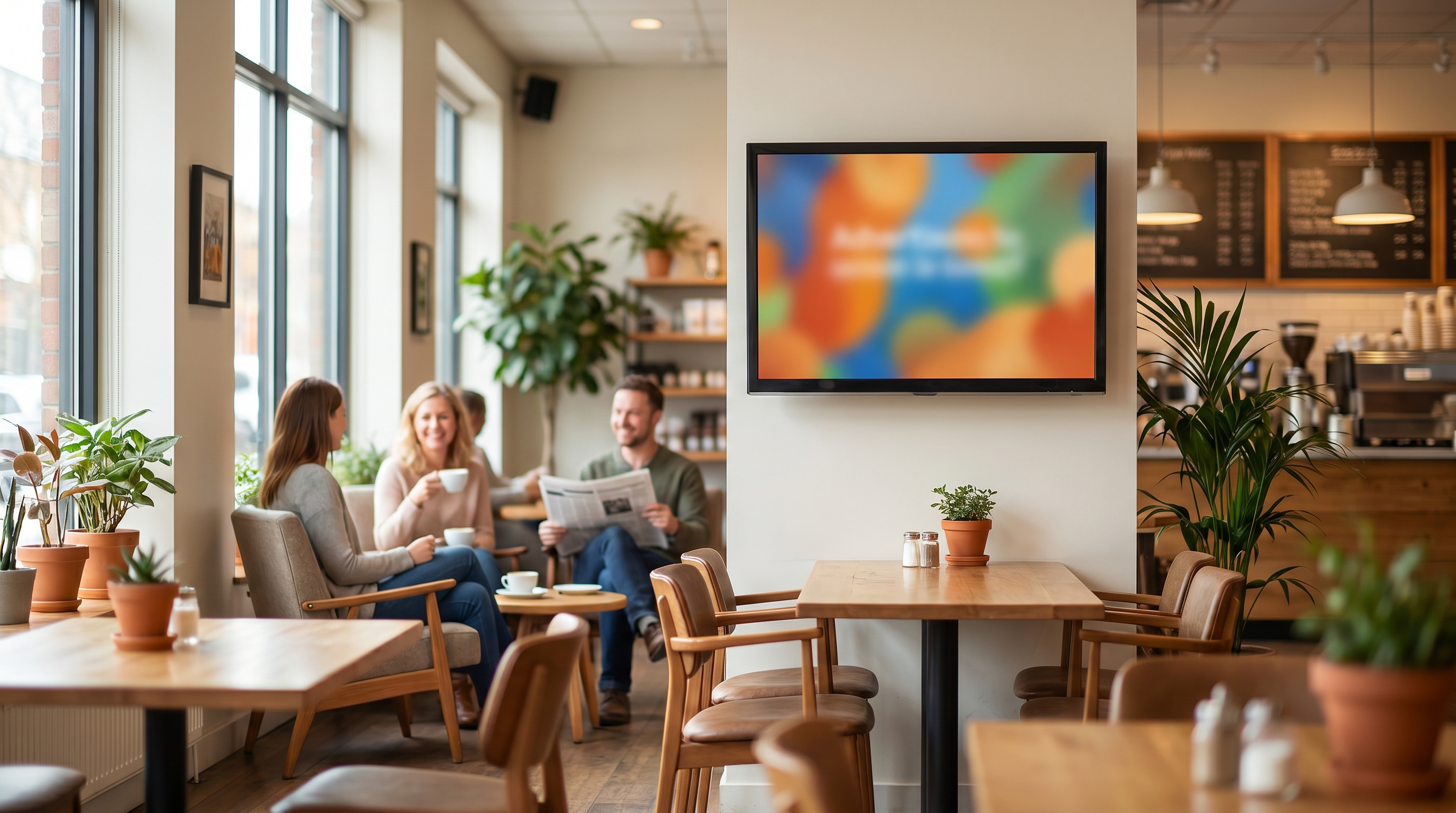
Waiting rooms are no longer just places to sit. They are highly valuable media assets.
In 2026, waiting room TV advertising has evolved from USB-driven loops into a sophisticated programmatic ecosystem.
Healthcare networks and Dental Service Organizations (DSOs) are uniquely positioned to capitalize on this shift. By leveraging modern ad infrastructure, operators can seamlessly make money with office screens.
With 757,000+ screens reachable through Trillboards and 29,000+ screens registered on our own network, Trillboards provides the enterprise-grade infrastructure to make this happen.
Whether you manage 100 clinics or a massive hospital network, this guide details how to build a lucrative revenue stream.
The Evolution of Medical Waiting Room Technology
The patient experience has undergone a massive transformation over the past decade.
Historically, medical waiting rooms were characterized by outdated magazines and silent, looping daytime television.
Today, these spaces are highly digitized, offering network operators a unique opportunity to monetize patient dwell time.
From Magazines to Digital Displays
The transition from print to digital displays was initially driven by a desire to modernize the clinic environment.
Early digital signage solutions were rudimentary, relying on USB flash drives physically plugged into the back of televisions.
These legacy systems offered no connectivity, no analytics, and absolutely no programmatic revenue potential.
Network operators quickly realized that manually updating content across hundreds of clinics was an unsustainable logistical nightmare.
The Rise of Interactive Patient Experiences
Modern clinics now deploy smart screens connected to cloud-based content management systems.
These screens display a mix of health education, clinic updates, and entertainment.
However, displaying content alone does not generate passive income for medical practices.
To turn these screens from cost centers into profit centers, operators must integrate an ad-serving layer capable of real-time bidding.
Wayfinding and Patient Check-In Integration
Many large hospital networks are integrating DOOH advertising directly into their interactive kiosks.
When a patient uses a touch-screen kiosk for wayfinding or check-in, they are fully engaged with the screen.
This high-intent interaction creates premium ad inventory that DSPs are eager to purchase.
By utilizing Trillboards' SDK, developers can inject programmatic ads into these interactive workflows seamlessly.
The Untapped Potential of Healthcare DOOH
The digital out-of-home (DOOH) landscape is experiencing explosive growth globally.
According to eMarketer's US Digital Out-of-Home Ad Spending Forecasts [1], programmatic DOOH is capturing an unprecedented share of total ad budgets.
Why? Because advertisers crave verified, high-attention environments that are completely immune to ad blockers.
Medical and dental waiting rooms represent the absolute pinnacle of these high-attention environments.
Why Dental and Medical Practices Yield Premium CPMs
Digital signage for dental offices and medical clinics offers something traditional roadside billboards cannot: massive dwell time.
Patients sit in waiting rooms for an average of 15 to 30 minutes before their appointments.
This creates a captive audience with sustained, verifiable attention that advertisers value highly.
Advertisers are willing to pay premium eCPMs (Effective Cost Per Mille) to reach these highly targeted demographics in a trusted, brand-safe environment.
Key Insight: A captive healthcare audience allows for sequential messaging, making it one of the most valuable IAB OpenOOH venue categories available to demand-side platforms (DSPs).
The Power of Captive Audiences
In programmatic advertising, context and location are everything.
Medical waiting rooms naturally filter audiences by location, insurance status, and health consciousness.
This granular targeting is why generating passive income from office screens is a highly scalable business model for network operators.
By categorizing your venues correctly under the IAB OpenOOH taxonomy, you unlock premium healthcare and pharmaceutical budgets.
Contextual Relevance and Advertiser Demand
Advertisers know that a patient in a dental waiting room is already thinking about oral health.
This makes them highly receptive to ads for toothbrushes, whitening treatments, and clear aligners.
Similarly, a patient in a pediatrician's office is a prime target for family-friendly brands, educational toys, and household goods.
The contextual relevance of these environments drives up conversion rates, which in turn drives up the value of your ad inventory.
Analyzing the DOOH Demand Ecosystem
To successfully monetize a medical screen network, operators must understand who is actually buying the inventory.
Programmatic demand is aggregated through Demand-Side Platforms (DSPs) like The Trade Desk, Yahoo DSP, and Google DV360.
These platforms represent the largest brands and media buying agencies in the world.
Who is Buying Medical Screen Inventory?
The demand for medical DOOH inventory is diverse and rapidly expanding.
Pharmaceutical companies are naturally the largest buyers, utilizing screens for direct-to-consumer (DTC) drug awareness campaigns.
Health insurance providers also heavily target these venues during open enrollment periods.
Beyond healthcare, local businesses like law firms, real estate agents, and auto dealerships buy this inventory to target local community members.
Pharmaceutical Advertising Regulations
Advertising in medical environments requires strict adherence to regulatory standards.
Pharmaceutical ads must comply with FDA guidelines regarding risk disclosures and fair balance.
This makes programmatic buying highly attractive to pharma brands, as they can update creatives instantly across thousands of screens if regulatory requirements change.
Trillboards' infrastructure supports real-time creative updates, ensuring compliance is always maintained.
Navigating Brand Safety in Pharma
Brand safety is paramount in medical environments, both for the clinic and the advertiser.
DSOs cannot risk displaying inappropriate content in a pediatric dental waiting room.
Conversely, a premium pharmaceutical brand does not want their ad playing next to unverified or controversial content.
Trillboards has performed 81,736 creative-level classifications across 23 IAB Content Taxonomy top-level categories.
This rigorous classification guarantees that only medically appropriate, brand-safe advertisements reach your screens.
The Economics of Medical Screen Monetization
To truly understand the revenue potential, network operators must grasp the underlying economics of programmatic DOOH.
Revenue is driven by two primary factors: fill rate and eCPM.
Optimizing both metrics is the absolute key to maximizing the profitability of your screen network.
Understanding eCPMs in Healthcare Venues
The eCPM represents the amount an advertiser pays for 1,000 ad impressions on your screens.
In generic retail environments, eCPMs might hover around $2 to $5.
However, in specialized healthcare venues, eCPMs frequently reach $15 to $30 due to the high value of the audience.
When you multiply these premium rates across thousands of daily impressions, the revenue potential becomes substantial.
Fill Rates and the VAST Waterfall
Fill rate is the percentage of your available ad slots that are successfully sold to advertisers.
A high eCPM is entirely useless if your fill rate is only 5%.
Trillboards maximizes fill rates through a sophisticated multi-demand-source VAST waterfall.
This system sequentially queries multiple demand sources, including the OpenRTB exchange, HiveStack, and Vidverto, to ensure every slot is filled.
Benefits of a VAST Waterfall:
- Maximizes overall yield by pitting demand sources against each other
- Reduces unsold inventory (remnant space)
- Ensures continuous playback of paid content
The Role of Google Ad Manager (GAM)
Many enterprise networks already use Google Ad Manager (GAM) for direct sales.
Trillboards offers seamless GAM integration with IVT-compliant VAST tags.
This allows network operators to run their direct-sold campaigns alongside our programmatic demand.
The result is a unified auction where direct sales and programmatic bids compete, guaranteeing the highest possible payout for every impression.
How Trillboards Transforms Screens into Revenue
Historically, monetizing a screen network required expensive software and massive direct sales teams.
Operators had to pay hefty monthly licensing fees just to keep their screens running.
Trillboards has completely inverted this model by offering a full Supply-Side Platform (SSP) and free digital signage software via our Partner SDK.
The Problem with Traditional CMS Platforms
Legacy CMS providers like BroadSign, Vistar, and ScreenCloud treat screens as cost centers.
They charge anywhere from $5 to $45 per screen, per month.
If you manage a network of 1,000 dental clinic screens, you are bleeding up to $45,000 monthly before serving a single ad.
These platforms were built for content management, not programmatic monetization.
The Hidden Costs of Building an In-House SSP
Some enterprise operators attempt to bypass CMS fees by building their own ad servers.
This is a monumental engineering challenge that is rarely successful.
Building an OpenRTB-compliant SSP from scratch requires a minimum investment of $500K+ in development costs.
Furthermore, maintaining server infrastructure, managing DSP integrations, and handling billing requires a dedicated, full-time engineering team.
The API-First Programmatic Advantage
Trillboards is the revenue layer for modern DOOH networks.
We provide a free ad server where publishers pay $0/screen/month.
Our platform monetizes exclusively through ad demand, not publisher fees, aligning our success directly with yours.
Our infrastructure is built for massive scale, currently operating across 28 countries and 2,170 distinct cities.
This global footprint ensures that healthcare networks receive diverse, high-fill-rate demand from day one.
Deep Dive: The OpenRTB 2.6 Standard in DOOH
For CTOs and Heads of Ad Operations, the underlying protocol of your SSP is critical.
Trillboards is built natively on the OpenRTB 2.6 specification.
This standard was specifically designed to handle the complexities of DOOH and CTV environments.
Why OpenRTB 2.6 Matters for Network Operators
Older RTB protocols were designed for web browsers, not digital billboards.
According to the IAB Tech Lab OpenRTB specifications [3], version 2.6 introduced critical features like pod bidding.
Pod bidding allows our SSP to request multiple ads for a single commercial break simultaneously.
This ensures competitive separation,meaning two competing toothpaste brands won't play back-to-back in your dental waiting room.
Pro Tip: Competitive separation is a mandatory requirement for premium healthcare advertisers. Without OpenRTB 2.6 podding, you simply cannot guarantee this separation.
The 14-Check Validation Runbook
Ad fraud is a massive concern for programmatic buyers.
To protect our publishers' reputations, we execute a rigorous 14-check OpenRTB 2.6 supply-chain validation runbook on every single ad request.
This runbook validates multiple layers of the supply chain in real-time.
Validation Checks Include:
- Verification of
sellers.jsontransparency records - Validation of
ads.txtauthorization - Cryptographic verification of
schain(SupplyChain) objects
By maintaining strict compliance, Trillboards ensures that DSPs bid confidently on your inventory.
Technical Infrastructure for Medical Screen Monetization
Transitioning to programmatic monetization requires robust technical infrastructure.
Trillboards delivers programmatic infrastructure-as-a-service through our @trillboards/ads-sdk.
This allows developers to integrate our exchange engine into TypeScript, React, React Native, or CTV applications in minutes.
Implementing the Free Digital Signage Software SDK
Our OpenAPI specification provides a full REST API for device, audience, and venue management.
You can explore the live Swagger UI at our developer documentation portal.
The SDK handles all the heavy lifting of caching media, tracking impressions, and firing VAST tracking pixels.
This leaves your engineering team free to focus on the core patient experience.
Advanced Features of the Trillboards SDK
Medical clinics frequently experience internet outages or slow connections.
Our SDK features advanced offline playback and intelligent media caching.
Ads are pre-fetched during off-peak hours and stored locally on the device.
When an internet outage occurs, the SDK continues to serve cached ads and queues the impression tracking pixels for later delivery.
Webhook-Driven Event Architecture
Managing a network of thousands of medical screens requires real-time observability.
Trillboards features a webhook-driven event architecture.
This system pushes real-time notifications directly to your backend servers.
Available Webhook Events:
- Device heartbeat status and offline alerts
- Impression delivery confirmations
- Real-time payout calculations
- Audience spike notifications
This event-driven approach ensures your NOC (Network Operations Center) always knows exactly what is happening across your fleet.
Audience Measurement and The OM SDK
Advertisers no longer buy screens; they buy audiences.
To attract premium programmatic demand, you must prove that real humans are watching your screens.
This is where advanced audience measurement comes into play.
Navigating MRC Compliance
The Media Rating Council (MRC) sets the gold standard for ad measurement.
According to the MRC Out-of-Home Measurement Standards [2], DOOH impressions must be verified based on actual opportunity-to-see (OTS) metrics.
Trillboards integrates the OM SDK (Open Measurement Software Development Kit) to provide this verification.
The OM SDK allows third-party verification vendors to independently measure viewability and attention metrics on your screens.
This level of transparency is absolutely mandatory for tier-one agency holding companies.
Real-Time Audience Intelligence
Trillboards goes beyond basic impression tracking.
We support real-time audience intelligence, including demographics, dwell time, and foot traffic analysis.
Currently, we have 66 sensing-enabled screens emitting segtax=600 audience signals during peak windows.
These computer vision sensors detect audience presence and demographics, keeping a record for each person the camera detects.
The screen never connects to a practice's patient records, charts or scheduling system; it measures the waiting room it sits in.
Maximizing Passive Income for Medical Practices
To maximize revenue, network operators must provide DSPs with rich audience data.
The more data you pass in your bid requests, the higher your fill rates and eCPMs will climb.
This data-driven approach is how non-traditional DOOH networks achieve massive profitability.
Other innovative operators are already proving this model, as JUUCE demonstrates with their portable phone charger rental kiosks with digital signage in stadiums.
Similarly, retail environments are capitalizing on this tech, as VapeTM demonstrates with their smart vending machines with digital displays and advertising screens.
Audience Targeting and Taxonomy
Trillboards supports advanced audience intelligence right out of the box.
Our platform supports 1,558 IAB Audience Taxonomy 1.1 nodes, allowing buyers to target specific demographics accurately.
In fact, we have observed 675 IAB audience segments in live impressions over the past 60 days alone.
When a DSP knows exactly who is sitting in your waiting room, they bid exponentially higher.
Real-World DOOH Success Stories
Healthcare is no different from high-traffic retail environments when it comes to monetization.
A well-placed screen in a busy clinic can generate hundreds of dollars in pure profit each month.
Pro Tip: For a deep dive into specific earning potentials, check out our comprehensive doctor office digital signage income guide.
We currently support 38 distinct venue categories under the IAB OpenOOH taxonomy.
By mapping your clinics to the correct taxonomy, you instantly alert healthcare DSPs to your premium inventory.
Measuring Campaign Success in Healthcare DOOH
Advertisers demand rigorous performance metrics before they commit large budgets to any DOOH network.
In the past, out-of-home advertising relied on rough estimates of foot traffic.
Today, programmatic buyers expect digital-like attribution models for their real-world campaigns.
Foot Traffic Attribution
Modern DOOH networks utilize mobile location data to prove campaign effectiveness.
When a patient sees an ad in a medical waiting room, their phone's mobile advertising ID can be matched against future location visits.
For example, if a patient sees an ad for a local pharmacy on your screen, attribution partners can track if that patient subsequently visited the pharmacy.
This closed-loop measurement proves the ROI of your screens, justifying higher eCPMs from advertisers.
Brand Lift Studies for Dental Practices
For major pharmaceutical and CPG brands, foot traffic is not the only metric that matters.
These brands frequently run brand lift studies to measure changes in consumer perception.
By partnering with third-party research firms, advertisers can survey patients who were exposed to ads on your network.
If your dental waiting room screens consistently drive high brand recall, DSPs will automatically route more premium budgets to your specific venue IDs.
Trillboards' detailed impression logs provide the exact timestamp data required to facilitate these advanced studies.
The Future of Medical DOOH Networks
The DOOH industry is evolving at a breakneck pace, and healthcare networks are at the forefront of this innovation.
As we look toward the future, several key trends will define the next generation of waiting room TV advertising.
Operators who adopt these technologies early will capture the lion's share of programmatic revenue.
Convergence of CTV and DOOH
The line between Connected TV (CTV) and DOOH is rapidly blurring.
Many medical practices are installing smart TVs that natively support CTV operating systems like Roku or Android TV.
Trillboards bridges this gap by supporting CTV environments natively through our SDK.
This convergence allows advertisers to buy medical screen inventory using the same video budgets they use for Hulu or YouTube.
Retail Media Networks in Healthcare
Retail Media Networks (RMNs) are currently the hottest trend in digital advertising.
Large pharmacy chains like CVS and Walgreens have already built massive in-store advertising networks.
Now, large Dental Service Organizations (DSOs) and hospital groups are following suit.
By treating your clinics as a unified media network, you can offer advertisers unprecedented access to health-conscious consumers at the exact point of care.
Trillboards provides the exact SSP infrastructure needed to launch and scale these specialized healthcare media networks.
Hardware and Software Ecosystems
One of the biggest hurdles in DOOH is hardware fragmentation.
Medical networks often inherit a massive mix of consumer TVs, commercial displays, and specialized media players.
Trillboards is designed to be completely hardware-agnostic to solve this problem.
Choosing the Right Media Players
Our SDK runs smoothly on a wide variety of hardware platforms.
Whether you use Android TV boxes, BrightSign players, or Raspberry Pi devices, integration is seamless.
For enterprise deployments, we strongly recommend System-on-Chip (SoC) displays from manufacturers like Samsung or LG.
These commercial-grade screens eliminate the need for external media players, significantly reducing points of failure.
Scaling from 100 to 10,000 Screens
Scaling a screen network requires robust API infrastructure.
Trillboards offers three distinct API tiers to support your growth.
The Basic tier handles 200 requests per minute, perfect for small pilot programs.
The Developer tier expands to 1,000 requests per minute and unlocks advanced venue intelligence.
For massive DSOs, our Enterprise tier handles 5,000+ requests per minute, includes raw data exports, and provides guaranteed SLAs.
Getting Started with Trillboards
Transitioning your network to Trillboards is a straightforward engineering task.
Our comprehensive documentation and dedicated support team make migration painless.
You can replace your expensive CMS with our free, revenue-generating infrastructure in a matter of weeks.
Step-by-Step Onboarding for Healthcare Networks
Ready to stop paying CMS fees and start earning ad revenue?
- Create a free publisher account on the Trillboards platform.
- Review our extensive guides hub for venue-specific monetization strategies.
- Install the
@trillboards/ads-sdkin your existing application. - Map your screens to the correct OpenOOH medical taxonomy.
- Launch your programmatic waiting room TV advertising network.
Explore our pricing page to see exactly how our $0/screen model works in detail.
Your waiting room screens are incredibly valuable real estate. It is time to start treating them like it.
Frequently asked questions
What is programmatic DOOH?
Programmatic Digital Out-of-Home (DOOH) is the automated buying and selling of digital billboard and screen advertising. It uses software and real-time bidding algorithms to match advertisers with available screen inventory, completely eliminating manual direct sales.
How much does Trillboards charge per screen?
Trillboards charges $0 per screen per month. Unlike traditional CMS platforms that charge $5 to $45 monthly, we are a free ad server that monetizes exclusively through ad demand via our SSP.
Does Trillboards touch patient data in a dental office?
Trillboards never connects to your patient records, charts or scheduling system. It does measure the waiting room: by default the screen reports the Bluetooth, Wi-Fi and local-network identifiers that nearby phones broadcast, and a screen with a camera keeps a record for each person it detects, with estimated age range, gender, mood, dwell time and attention. Trillboards sells and shares that audience measurement and location data with its data partners. The Data Processing Addendum at trillboards.com/legal/data-processing sets out every category, how long each is kept and who receives it.
Can I control what ads play in my medical practice?
Absolutely. Trillboards provides robust brand safety controls. Through our creative-level classifications across IAB Content Taxonomy categories, operators can block specific advertiser categories to ensure content remains appropriate for medical environments.
How do I integrate the Trillboards SDK?
Our @trillboards/ads-sdk is available for TypeScript, React, React Native, and Flutter. You can access our OpenAPI specification and Swagger UI to integrate programmatic infrastructure-as-a-service directly into your existing software stack.
Do I need special hardware to run Trillboards?
No. Trillboards is entirely hardware-agnostic. As long as your screens are connected to a media player or smart TV capable of running standard digital signage applications (like Android TV, BrightSign, or custom CTV apps), you can integrate our SDK.
How do I get paid for my screen inventory?
Trillboards handles all billing and collections from DSPs and advertisers. Publishers receive automated monthly payouts via direct deposit, based on the total eCPM revenue generated by their onboarded screens across the network.