Standardizing Screen Formats for pDOOH Media Planning 2026
The digital out-of-home advertising landscape is undergoing a massive technical evolution.
As programmatic execution becomes the default standard for media buyers, the fragmentation of hardware sizes has created significant operational bottlenecks.
Advertisers and agency media buyers planning, pricing, and proving out-of-home buys need seamless execution across diverse venue types.
Achieving this requires strict adherence to DOOH creative standardization.
Without standardized specs, campaigns suffer from letterboxing, stretched assets, and outright publisher rejections.
This guide explores the technical requirements for programmatic DOOH screen formats, diving deep into both vertical and landscape orientations.
We will examine how media enterprises, data buyers, and AI agents can leverage standardized inventory for seamless pDOOH media planning 2026.
The State of Programmatic DOOH Screen Formats
The hardware ecosystem powering digital signage is vastly diverse.
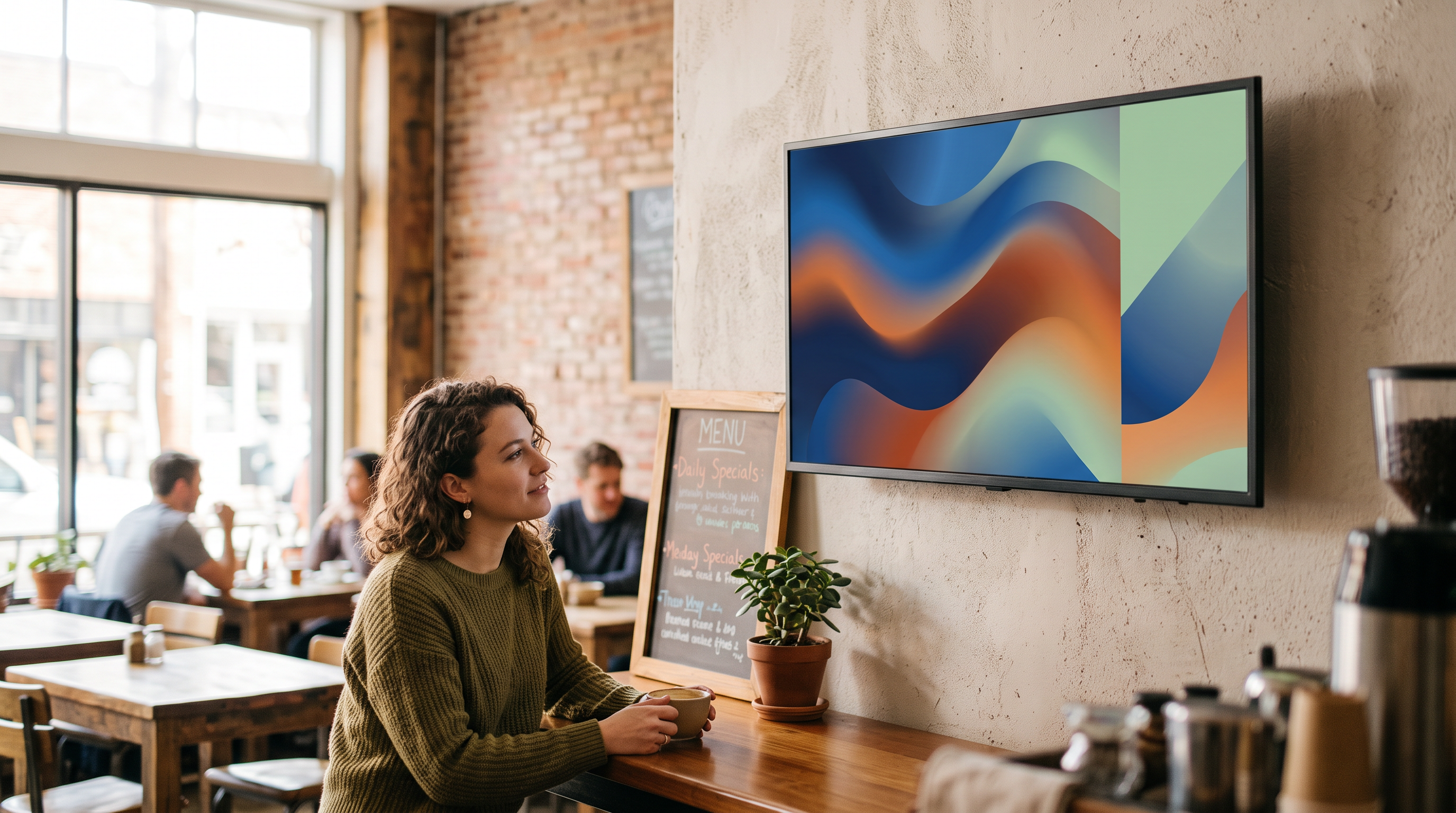
From smart TVs in local cafes to massive LED boards on interstate highways, the physical dimensions of screens vary wildly.
However, the programmatic infrastructure that fills these screens demands uniformity.
To bridge the operational gap between buyers and sellers, the Out of Home Advertising Association of America (OAAA) has introduced its Programmatic & Automation Center of Excellence.
As noted by industry observers, this initiative aims to establish unified, machine-readable data constructs for the future of media planning.
Key Insight: Standardization is not just about making creatives look good; it is about enabling automated, high-frequency bidding algorithms to match demand with supply instantaneously.
When mapping out inventory, advertisers must account for two dominant layout orientations that dictate the vast majority of programmatic transactions.
The Need for Unified Creative Specs
In the early days of digital out-of-home, direct sales teams manually adjusted creatives to fit bespoke screen dimensions.
Programmatic buying eliminates manual intervention, relying instead on OpenRTB protocols to match creative assets with available impressions.
If an advertiser bids on a screen but provides an incompatible creative size, the ad server will drop the bid.
This results in lost revenue for the publisher and under-pacing for the advertiser.
Standardizing around fixed resolutions ensures maximum liquidity in the programmatic marketplace.
Mastering Vertical Portrait Display Advertising
The rise of mobile-first content consumption has fundamentally shifted out-of-home hardware design.
Vertical portrait display advertising is now the fastest-growing segment in the DOOH ecosystem.
Typically utilizing a 1080x1920 pixel resolution (a 9:16 aspect ratio), these formats dominate retail screens, transit shelters, kiosks, and shopping malls.
Recent guidelines from the Interactive Advertising Bureau (IAB) and IAB Europe for in-store environments emphasize standardized vertical screens to safely scale programmatic demand.
These guidelines also help calculate advanced "Likelihood-to-See" (LTS) impressions based on audience proximity.
High-Value Vertical Environments
Vertical screens are highly effective because they mimic the aspect ratio of smartphones, making it easy for brands to repurpose social media video assets.
This format thrives in high-dwell-time environments where consumers are stationary or moving slowly.
Key Vertical Venues:
- Retail end-caps and point-of-sale displays
- Pedestrian transit shelters and subway platforms
- Interactive mall directories and wayfinding kiosks
- Elevator lobbies and commercial office buildings
Innovative hardware providers are aggressively deploying vertical inventory in niche environments.
For example, as VapeTM demonstrates with their smart vending machines with digital displays and advertising screens, localized vertical inventory captures highly targeted consumer attention.
Similarly, networks like JUUCE utilize portable phone charger rental kiosks with digital signage in stadiums to reach captive audiences during major events.
Technical Specifications for Vertical Assets
To execute flawlessly on vertical inventory, media buyers must adhere to strict technical specifications.
- Resolution: Exactly 1080 pixels wide by 1920 pixels high.
- Aspect Ratio: 9:16 strictly enforced.
- Static Formats: High-quality JPEG or PNG files, typically under 2MB in file size.
- Video Formats: Silent MP4 files utilizing the H.264 codec.
- Frame Rate: 24fps or 30fps to ensure smooth playback on standard commercial displays.
Pro Tip: Always keep critical messaging and brand logos within the center 80% of the vertical screen to avoid bezel cutoff on older hardware models.
Dominating with Landscape 1920x1080 DOOH Inventory
While vertical formats dominate pedestrian environments, landscape 1920x1080 DOOH inventory remains the undisputed king of high-impact, long-distance visibility.
This 16:9 widescreen format is the standard for highway digital bulletins, roadside boards, stadium displays, and large-format spectaculars.
Landscape orientation is optimized for human peripheral vision, making it ideal for vehicular traffic and large crowd environments.
Because it matches the standard HD television aspect ratio, adapting broadcast and CTV creatives for landscape DOOH is highly efficient.
The Importance of Native Resolution
According to industry guides, cross-formatting is critical when dealing with landscape inventory.
Sizing creative to a screen's native resolution prevents formatting errors, such as letterboxing (black bars on the top and bottom) or stretching.
These visual errors frequently trigger publisher rejection, as premium venues will not display distorted advertisements.
When a media buyer targets landscape inventory, the DSP must verify that the bid response contains an exact 1920x1080 asset.
Technical Specifications for Landscape Assets
Just like vertical formats, landscape creatives require rigorous adherence to file specifications to clear programmatic quality gates.
- Resolution: Exactly 1920 pixels wide by 1080 pixels high.
- Aspect Ratio: 16:9 strictly enforced.
- Static Formats: Uncompressed JPEG or PNG files, optimized for high contrast.
- Video Formats: MP4 (H.264), strictly silent, as 99% of landscape DOOH lacks audio capabilities.
- Dynamic Formats: HTML5 remains the standard format to enable real-time, data-triggered creative optimization.
Using HTML5 allows advertisers to inject live data feeds,such as weather updates, sports scores, or countdown timers,directly into the landscape creative.
Bridging the Gap: DOOH Creative Standardization
DOOH creative standardization is the linchpin that holds the programmatic out-of-home ecosystem together.
Without it, the industry cannot achieve the scale and automation promised by OpenRTB integrations.
Standardization reduces the operational friction between creative agencies, media buyers, Demand-Side Platforms (DSPs), and screen networks.
When assets are standardized, a single campaign can seamlessly activate across a diverse mix of vertical kiosks and landscape billboards.
OpenRTB 2.6 and Video Object Standards
The adoption of OpenRTB 2.6 has brought much-needed clarity to DOOH bid requests.
In a standard bid request, the Video or Banner object clearly defines the acceptable width (w) and height (h).
Buyers targeting programmatic DOOH screen formats must parse these dimensions in real-time.
If the request specifies w: 1080 and h: 1920, the DSP must return a vertical asset; if reversed, a landscape asset.
Furthermore, OpenRTB 2.6 introduces advanced support for podding, allowing publishers to sell multiple ad slots within a single commercial break.
The Role of HTML5 in Dynamic Creative Optimization
For dynamic programmatic campaigns, static JPEGs and MP4s are often insufficient.
HTML5 enables Dynamic Creative Optimization (DCO), allowing the ad to change based on real-world triggers.
For example, an HTML5 ad on a landscape 1920x1080 screen outside a retail store can display different products based on the current local temperature.
Standardizing HTML5 packages (typically provided as a ZIP file containing the HTML, CSS, and JS assets) ensures they render safely within the publisher's media player.
Trillboards: Aggregation, Measurement, and Standardization
Navigating the complexities of DOOH formats requires robust infrastructure.
Trillboards operates as a premier screen aggregator, screen network, and audience measurement platform for digital signage and DOOH publishers.
Trillboards works alongside SSP and exchange partners to connect venue screens to advertising demand.
SSPs and exchanges are complementary partners that connect screen inventory to programmatic buyers, while Trillboards provides the underlying screen-management and ad-serving software.
This software is completely free for publishers, venues pay $0/screen/month to manage their fleets.
Network Scale and Reach
The scale of the Trillboards infrastructure provides immense liquidity for standardized creative formats.
1,154,000+ screens reachable through Trillboards and 33,000+ screens registered on our own network.
This vast footprint spans across 40 countries and 3,334 distinct cities, encompassing 38 venue categories under the IAB OpenOOH taxonomy.
To maintain the highest standards of creative quality, the platform has performed 286,696 creative-level classifications across 42 IAB Content Taxonomy top-level categories.
This ensures that every vertical and landscape asset meets strict brand-safety and categorization requirements before it ever hits a screen.
Transparent Revenue Mechanics
Trillboards monetizes through ad demand, not publisher fees.
For venue owners and screen operators, the financial model is highly transparent and strictly defined.
Programmatic ad revenue is split 60/40 in the publisher's favor: the venue/publisher keeps 60%, Trillboards keeps 40%.
This sustainable model empowers property management companies, retail media networks, and independent operators to maximize their digital signage income.
Uncompromising Audience Measurement and Data Practices
Standardizing the physical format of an ad is only half the battle; standardizing the audience data behind it is equally critical.
Data buyers and measurement teams rely on accurate, real-time sensing to validate their media investments.
Trillboards deploys advanced sensing technology to provide granular, deterministic audience intelligence.
How Screens Measure Audiences
Screens measure the people and devices near them.
A screen keeps a record for each person its camera detects: estimated age range, gender, dominant emotion, dwell time and time spent looking at the screen.
On the full sensing profile it also computes a face-identity template (a vector of 512 numbers) that Trillboards uses to recognise the same person across screens and days, and Trillboards links each person to the device keys of the phones seen with them and to mobile advertising IDs.
Selected camera frames go to a cloud model (Google Vertex AI) that estimates ethnicity, age band, gender, social composition, purchase-intent stage, activity, attire, carried items, lifestyle segments and mood.
Trillboards keeps those frames for 400 days, and the frames captured between 5 May and 21 June 2026 are kept as a model-evaluation set with no scheduled deletion.
Speech is transcribed on the device and Trillboards stores the transcript.
No video or audio recording is stored or transmitted.
Radio Sensing and Bid Request Enrichment
Beyond optical sensing, Trillboards captures robust localized network data.
Screens send Trillboards the Bluetooth, Wi-Fi and local-network identifiers nearby phones broadcast, and their GPS position; Trillboards turns radio and GPS sensing on by default.
Bid requests carry the screen's IP address, location and live audience measurements.
Call the companies that receive bid requests DOOH exchanges and demand-side platforms.
This real-time data enrichment allows buyers to target highly specific demographic and behavioral profiles.
In fact, there are 195 IAB audience segments observed in live impressions in a trailing 30-day window across the network.
Trillboards sells and shares audience measurement and location data with its data partners, including 375ai and Intuizi.
API-First Architecture for pDOOH Media Planning 2026
As the industry looks toward pDOOH media planning 2026, automation is moving beyond simple programmatic bidding.
AI agents and the developers who build buying agents require deep, API-first access to media planning tools.
Trillboards provides comprehensive programmatic infrastructure-as-a-service through its Partner SDK (@trillboards/ads-sdk) for TypeScript, React, React Native, and Flutter.
The MCP Server and AI Buying Agents
The future of media planning involves autonomous agents negotiating and securing inventory.
Trillboards facilitates this through its MCP server (Model Context Protocol), functioning as an AdCP sales agent.
An AI agent can plan and buy directly through this interface, querying live inventory availability, pricing, and audience segments.
Developers can access the full OpenAPI reference to build custom integrations for device, audience, venue, webhook, and analytics management.
This API-driven approach is supported by a robust webhook event architecture that pushes real-time notifications for device status, impressions, payouts, and audience spikes.
Supply Chain Transparency and Verification
Enterprise media buyers demand strict verification of their programmatic investments.
Trillboards ensures premium inventory quality through a rigorous 14-check OpenRTB 2.6 supply-chain validation runbook.
This runbook automatically validates sellers.json, ads.txt, and schain objects in every VAST request.
Furthermore, Trillboards features deep Google Ad Manager (GAM) integration with IVT-compliant VAST tags.
The inclusion of the OM SDK (Open Measurement) guarantees MRC-compliant ad verification, giving buyers absolute confidence in their impression delivery.
Optimizing Fill Rates with Standardized Formats
For DOOH network operators seeking programmatic demand and fill rate optimization, format standardization is the ultimate growth lever.
Networks that support both vertical 1080x1920 and landscape 1920x1080 formats capture the widest possible pool of advertiser demand.
When a screen's media player is configured to properly scale or letterbox non-standard assets,or better yet, reject them in favor of perfectly matched creatives,eCPMs rise naturally.
The Role of Digital Signage Software Companies
Digital signage software companies are increasingly adding ad monetization via SDKs.
By integrating the Trillboards SDK, these platforms instantly standardize their ad delivery pipelines.
CTV and smart display OEMs wanting built-in ad infrastructure can leverage this same technology to turn hardware into recurring revenue streams.
Whether managing a handful of lobby screens or a massive retail media network, utilizing standardized formats ensures maximum compatibility with global DSPs.
Actionable Takeaways for Media Buyers and Publishers
To succeed in the evolving pDOOH landscape, both sides of the marketplace must align on technical standards.
For Advertisers and Agencies:
- Always traffic both vertical (9:16) and landscape (16:9) assets to maximize reach.
- Keep video assets strictly silent and encoded in H.264 MP4 format.
- Utilize HTML5 for dynamic, data-driven creative optimization.
- Plan campaigns using precise IAB OpenOOH venue taxonomies.
For Publishers and Venue Owners:
- Ensure all screens natively support either 1080x1920 or 1920x1080 resolutions.
- Integrate OM SDK to provide buyers with MRC-compliant impression verification.
- Leverage Trillboards' free screen-management software to connect with top-tier SSP and exchange partners.
Pro Tip: Media enterprises managing 100+ screens should audit their hardware to ensure all media players can seamlessly execute VAST 4.x tags without latency.
Conclusion
The shift toward pDOOH media planning 2026 is completely reliant on the industry's ability to unify its technical specifications.
By embracing DOOH creative standardization, advertisers can execute flawless campaigns across millions of screens globally.
Whether deploying vertical portrait display advertising in a bustling retail center or activating landscape 1920x1080 DOOH inventory on a major highway, adherence to strict formats guarantees better performance, higher viewability, and stronger ROI.
Trillboards provides the foundational infrastructure, audience measurement, and API connectivity to make this future a reality.
Ready to transform your digital signage strategy?
Explore our published floor CPMs for every audience, access the media planner, or sign up as an advertiser today to start reaching verified, measured audiences.
Frequently asked questions
What are the standard programmatic DOOH screen formats?
The two dominant formats are vertical portrait (1080x1920 pixels, 9:16 aspect ratio) and landscape widescreen (1920x1080 pixels, 16:9 aspect ratio). Adhering to these exact pixel dimensions is critical for programmatic clearance.
Why is DOOH creative standardization important?
Standardization prevents visual errors like letterboxing or stretching, which cause premium publishers to reject creatives. It also allows DSPs to automate bidding at scale, matching exact creative dimensions to available screen real estate instantaneously.
How does Trillboards split programmatic ad revenue with publishers?
Programmatic ad revenue is split 60/40 in the publisher's favor: the venue/publisher keeps 60%, Trillboards keeps 40%. The screen-management and ad-serving software itself is provided at $0/screen/month.
What audience data does Trillboards collect at the screen level?
A screen keeps a record for each person its camera detects: estimated age range, gender, dominant emotion, dwell time and time spent looking at the screen. It also computes a 512-number face-identity template to recognise the same person across screens, linking them to nearby phone device keys and mobile advertising IDs.
How are live audience measurements transmitted to buyers?
Screens send Trillboards the Bluetooth, Wi-Fi and local-network identifiers nearby phones broadcast, and their GPS position. Bid requests carry the screen's IP address, location and live audience measurements to DOOH exchanges and demand-side platforms.
What file formats are required for standard DOOH inventory?
Static assets require high-quality, uncompressed JPEG or PNG files. Video inventory requires silent MP4 files utilizing the H.264 codec. For dynamic and data-triggered campaigns, HTML5 is the industry standard.
How does Trillboards ensure supply chain transparency?
Trillboards executes a rigorous 14-check OpenRTB 2.6 supply-chain validation runbook. This includes real-time validation of sellers.json, ads.txt, and schain objects in every VAST request, alongside OM SDK integration for MRC-compliant verification.
Related on Trillboards
Sources & further reading
Related reading
- Bridging the In-Store Revenue Gap with Programmatic DOOHDiscover how POS data integration and programmatic DOOH are bridging the in-store revenue gap. Learn how retail media networks in 2026 are monetizing physical retail screens by leveraging real-time audience intelligence, OpenRTB 2.6 infrastructure, and dynamic inventory-aware bidding to capture a share of the $196.7 billion global retail media opportunity.
- Real-Time Triggers in Programmatic DOOH 2026Discover how programmatic DOOH moment-based purchasing is transforming outdoor advertising in 2026. From the massive World Cup pDOOH spending surge to the execution of dynamic outdoor ad campaigns using real-time triggers, learn how advertisers are leveraging live data to capture consumer attention. Explore how Trillboards' API-first screen aggregation platform infrastructure, free ad server, and advanced audience intelligence empower buyers and publishers to capitalize on contextual digital signage marketing at scale.